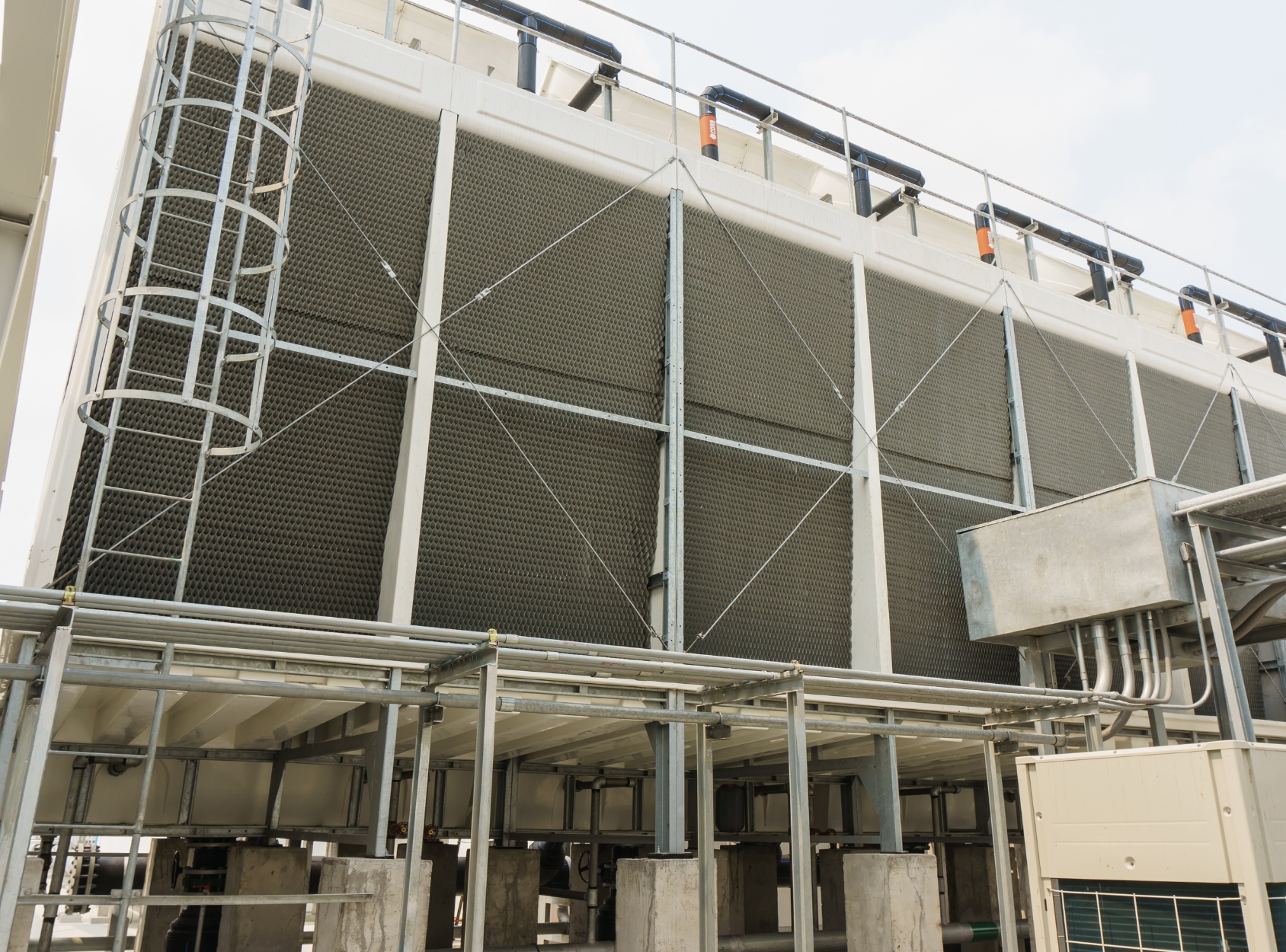
Cooling towers concentrate minerals and organic contaminants while providing conditions that can encourage biological growth. Controlled ozone treatment can support oxidation and microbial management as part of a complete water-treatment programme.
Key Benefits
- Biofilm and microbial-control support
- Oxidation of selected organic contaminants
- Potential reduction in conventional biocide demand
- Cleaner heat-transfer surfaces
Application Engineering
Water chemistry, cycles of concentration, tower volume, circulation flow, materials and ozone demand determine feasibility. Warm water reduces ozone solubility and lifetime, while dead zones prevent consistent treatment, so circulation and ozone-compatible materials are essential. Conductivity, ORP and residual monitoring can be integrated into the control strategy.
How the System Works
Oxygen feed is prepared, converted to ozone through electrical discharge, transferred into the treatment medium and given sufficient contact time. Monitoring and safety controls verify performance and manage residual ozone.
Discuss your application
Share your flow, treatment objective and operating conditions with our engineering team.
Request a Recommendation